
The NXP UJA1167ATK: A Comprehensive System Basis Chip for Automotive Networking Applications
The increasing complexity of modern vehicle electronic architectures demands highly integrated, robust, and reliable components. At the heart of many of these systems lies the System Basis Chip (SBC), a class of devices that consolidate multiple critical functions into a single package. The NXP UJA1167ATK stands out as a premier solution designed specifically to meet the stringent requirements of automotive networking, providing a compact and efficient foundation for electronic control units (ECUs).
This SBC is engineered to serve as a local power supply and communication gateway for microcontrollers in high-performance automotive networks, particularly those based on Controller Area Network (CAN) and CAN Flexible Data Rate (FD) protocols. Its primary role is to manage power, handle network communication, and ensure the system's resilience against the harsh electrical environment of an automobile.
Key features and functionalities of the UJA1167ATK include:
Integrated High-Speed CAN/CAN FD Transceiver: The chip features a fully compliant CAN transceiver, supporting data rates up to 5 Mbit/s for CAN FD. It offers excellent electromagnetic compatibility (EMC) and electrostatic discharge (ESD) protection, which is critical for ensuring error-free communication in the noisy environment of a vehicle.
Advanced Power Management Unit: The UJA1167ATK incorporates a sophisticated power system. It includes a 5.0 V or 3.3 V low-dropout (LDO) voltage regulator with high current capability to power the microcontroller and other external components. This regulator is highly accurate and features over-temperature and short-circuit protection, safeguarding the entire ECU.
Enhanced System Protection and Monitoring: A significant advantage of using an SBC like the UJA1167ATK is the heightened level of system monitoring. It provides comprehensive failure detection and management, including undervoltage detection on the supply lines and overtemperature shutdown. Its fail-safe outputs contribute to a safer system state in the event of a fault.
Low-Power Management Modes: For applications requiring minimal power consumption, such as in "always-on" ECUs, the chip supports multiple low-power modes. It can wake up the entire system from a very low quiescent current sleep mode via a CAN message or a local wake-up event, making it ideal for power-sensitive nodes in the network.
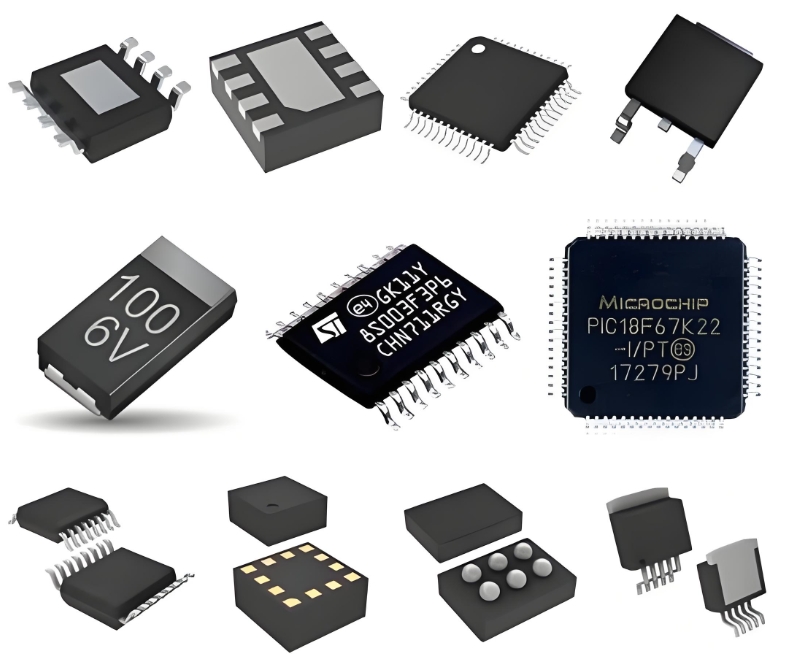
Small Footprint and High Integration: By combining the transceiver, voltage regulators, watchdog, and protection circuits into a single 32-pin package, the UJA1167ATK significantly reduces the PCB space and system cost compared to discrete implementations. This high level of integration also enhances overall reliability by minimizing the number of external components.
Target applications for the UJA1167ATK are vast within the automotive domain, including body control modules, gateway modules, lighting systems, and door control units. Its robustness and integration make it a cornerstone for building reliable ECUs that must operate flawlessly over the vehicle's entire lifetime.
The NXP UJA1167ATK is an exemplary System Basis Chip that encapsulates the core requirements of modern automotive electronics: robust communication, integrated power management, and unwavering reliability. Its comprehensive feature set provides designers with a single-chip solution that simplifies architecture, reduces development time, and ensures performance in the demanding automotive environment.
Keywords: System Basis Chip (SBC), CAN FD, Automotive Networking, Power Management, Low-Power Modes.

