
Intel RC28F256J3C125: A Comprehensive Technical Overview of the 256-Mbit Flash Memory Device
The Intel RC28F256J3C125 represents a significant milestone in the evolution of non-volatile memory technology. As a 256-Mbit (32-MByte) StrataFlash memory device, it was engineered to deliver a robust combination of density, performance, and reliability for a wide array of embedded systems, from networking hardware and telecommunications infrastructure to industrial controllers and avionics.
Fabricated on Intel's advanced multilevel cell (MLC) technology, this device stores two bits of data per memory cell, a feature that was pivotal in achieving higher densities and reducing cost per bit without a proportional increase in die size. Operating from a single 3.3V power supply (VCC) for all read, program, and erase operations, it simplifies system power design and is compatible with standard low-voltage logic. A crucial feature for write operations is the requirement for a 12.0V VPP programming voltage, which is supplied to a dedicated pin to enable the high-energy electrons necessary for altering the state of the floating gate memory cells.
The device is organized as 32 Mbytes of 8 bits each, making it ideal for both code storage and execution (execute-in-place, or XIP) and data storage applications. Its interface is a synchronous burst mode, which significantly enhances read performance. By providing an initial address and then using a clock to output subsequent data at a rate of one word per clock cycle, it achieves high-speed sequential access, which is critical for modern high-performance processors.
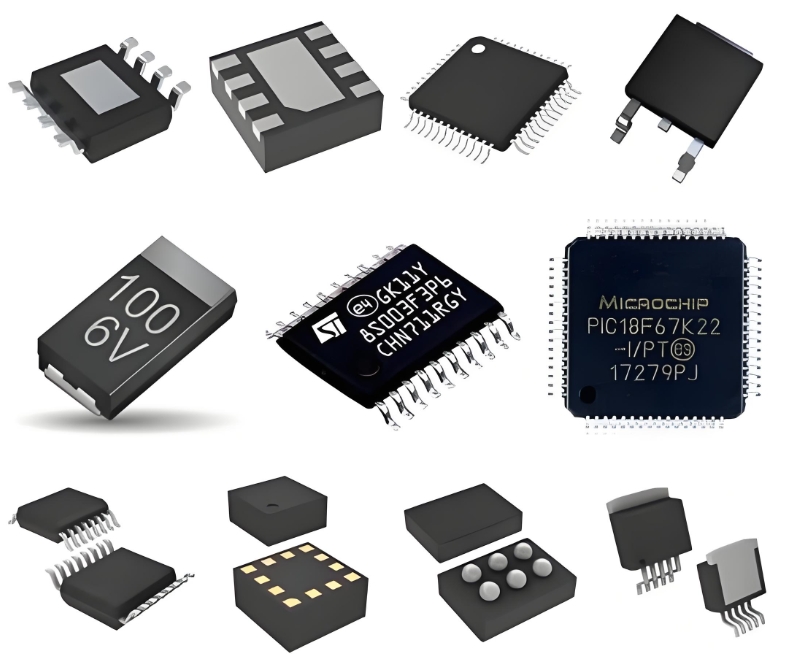
A key architectural strength lies in its asymmetric block architecture. The memory array is divided into multiple writeable blocks. This architecture typically includes smaller, more frequently erased parameter blocks (e.g., 64-Kwords) for storing variables and larger main blocks (e.g., 128-Kwords) for storing the primary application code. This design allows for efficient memory management, where smaller blocks can be erased quickly with less wear for data that changes often, while larger blocks provide dense storage for more static code.
Reliability is a cornerstone of its design. The device supports a minimum of 100,000 program/erase cycles per block, ensuring longevity in applications requiring frequent firmware updates. Data retention is specified at up to 20 years, guaranteeing data integrity over the long operational life of the end product. Furthermore, it incorporates advanced command set functionality that allows for sophisticated write and erase suspend operations. This means a higher-priority read operation from another block can interrupt a lengthy programming or erase cycle, vastly improving system responsiveness.
To protect the integrity of the stored data, the device includes several hardware and software features. A hardware-based write protection mechanism allows specific blocks to be locked to prevent accidental or malicious writes. Additional security is provided through an absolute protection feature that can permanently lock a block, making its contents immutable.
ICGOOODFIND: The Intel RC28F256J3C125 is a quintessential example of high-density, reliable flash memory for demanding embedded environments. Its blend of MLC technology, asymmetric block architecture, sophisticated burst interface, and robust protection mechanisms made it a versatile and powerful solution for developers building the complex electronic systems of its era.
Keywords: StrataFlash Memory, 3.3V Power Supply, Asymmetric Block Architecture, Execute-in-Place (XIP), Program/Erase Cycle.

