
Unlocking the Potential of the NXP MK81FN256VLL15 32-bit Microcontroller for Advanced Embedded Systems Design
The relentless drive towards smarter, more connected, and efficient electronic products places increasing demands on embedded systems designers. Selecting the right microcontroller (MCU) is paramount, as it forms the computational heart of the application. The NXP MK81FN256VLL15, a member of the robust Kinetis K80 family, emerges as a premier choice for tackling the complexities of advanced designs, particularly those requiring high performance and robust safety features.
At its core, the MK81FN256VLL15 is built upon the powerful Arm® Cortex®-M4 core with a floating-point unit (FPU). This architecture is a significant enabler for computationally intensive tasks. The FPU accelerates mathematical operations, making the MCU exceptionally well-suited for applications involving digital signal processing (DSP), real-time data analysis, and complex control algorithms. This capability is crucial in domains such as industrial automation, where precise motor control is needed, or in medical devices for processing sensor data.
A standout feature of this MCU is its integrated hardware fault detection and safety functionality. In safety-critical systems—common in automotive, industrial, and medical fields—preventing and mitigating faults is non-negotiable. The MK81FN256VLL15 addresses this with a suite of safety mechanisms, including memory error correction (ECC), cyclic redundancy check (CRC) engine, and windowed watchdog timers. These features help designers meet the stringent requirements of functional safety standards like IEC 61508 SIL/SIL or ISO 26262 ASIL, reducing the burden of implementing these complex checks in software.
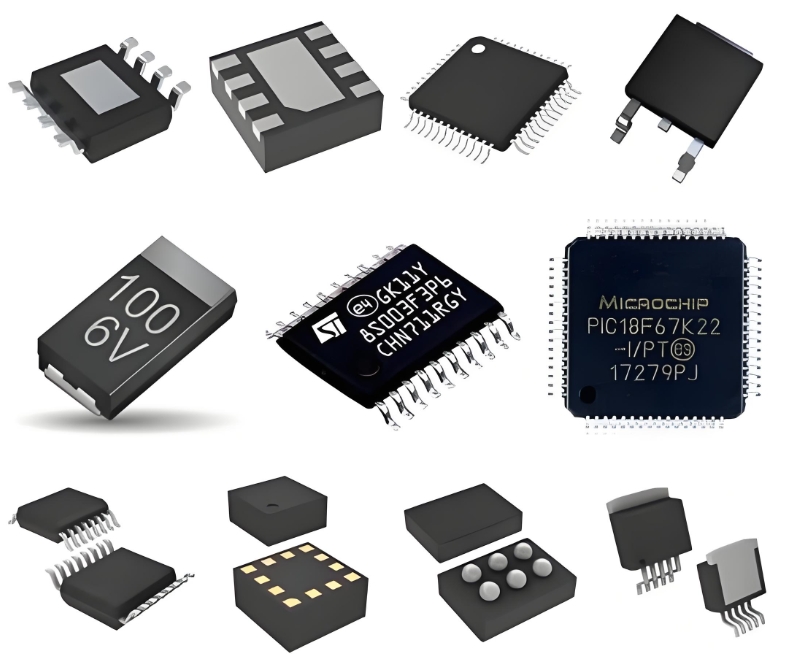
The device's 256 KB of program flash and 128 KB of SRAM provide ample room for sophisticated application code and data handling. This memory capacity, combined with flexible connectivity options like multiple UART, SPI, I2C, and CAN modules, allows the MCU to act as a central hub in a networked system. It can efficiently manage communication between various sensors, actuators, and other system components, facilitating the design of complex interconnected devices.
Furthermore, its low-power performance characteristics ensure that this high level of functionality does not come at an excessive energy cost. This balance makes it equally applicable for portable or battery-powered equipment where energy efficiency is a key design constraint.
For developers, NXP provides a comprehensive ecosystem supported by the MCUXpresso IDE and Software Development Kit (SDK). This integrated environment streamlines the development process, from code writing and debugging to configuration and optimization. The availability of production-ready drivers, middleware, and example code significantly accelerates time-to-market, allowing engineers to focus on innovation rather than foundational software setup.
ICGOOODFIND: The NXP MK81FN256VLL15 is a powerhouse MCU that successfully bridges the gap between high computational performance and stringent safety requirements. Its Arm Cortex-M4 core, integrated safety features, and substantial memory make it an ideal foundation for pioneering next-generation embedded systems in medical, industrial, and automotive applications.
Keywords: Arm Cortex-M4, Functional Safety, Floating-Point Unit (FPU), Embedded Systems Design, Kinetis K80 Family.

